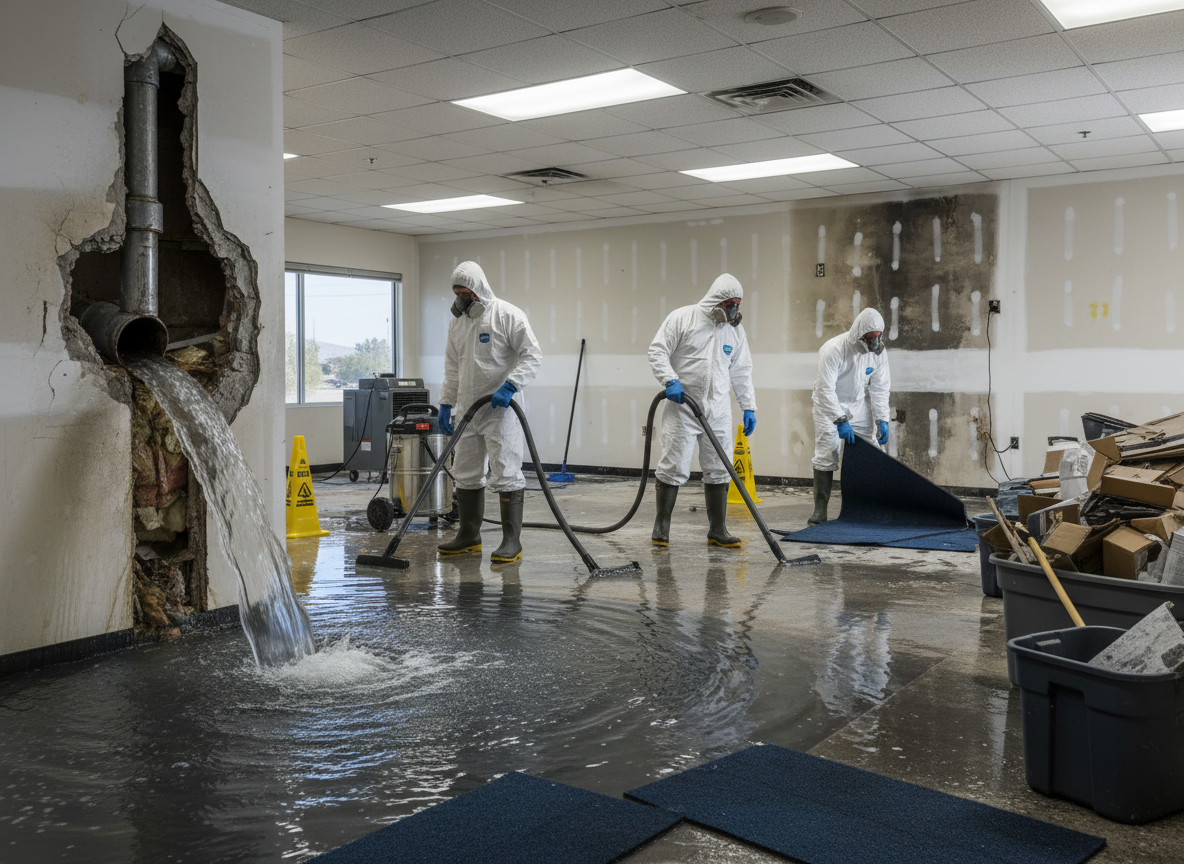
People are often surprised that pipes freeze in the Mojave Desert. Adelanto sits at about 3,400 feet, and neighboring Victorville averages 79 days a year with lows of 32 degrees or colder. A supply line in an exterior wall, attic or garage can split overnight and run for hours before anyone wakes up. A burst line inside a wall can soak insulation, drywall and the floor below long before water shows at the baseboard.
The American Red Cross lists the pipes most at risk as supply lines in unheated interior areas such as crawl spaces, attics, garages and kitchen cabinets. To thaw a frozen pipe, use an electric heating pad, a hair dryer, a portable space heater kept away from anything flammable, or towels soaked in hot water. Never use a blowtorch, a kerosene or propane heater, a charcoal stove or any other open flame. When you leave for a trip in cold weather, keep the heat no lower than 55 degrees.
Water heaters are the other common source. In California, Health and Safety Code section 19211 requires residential water heaters to be braced, anchored or strapped so they resist falling in an earthquake, and the San Andreas Fault runs through the Cajon Pass a few miles south of Hesperia. California's bracing guidelines describe typical residential tanks of 30 to 75 gallons, and a tank that tips or rusts through can empty into a garage or closet quickly. Close the cold supply valve on top of the tank and turn off the power or gas before cleanup begins.
Slow leaks do their damage quietly. The California Department of Public Health lists the signs to look for: visible mold, a musty odor, stains, peeling paint, warped floors and rotting wood, and materials that feel damp. Under-sink supply lines, toilet connections, dishwasher lines and washing machine hoses are the usual culprits. Moisture meters and, where needed, small inspection openings let the restoration team find how far the water traveled before drying starts.
A plumber repairs the pipe, and the restoration team dries and repairs the building. If you hire separately, you can check any contractor's license on the CSLB website before work starts. Ask the restoration team to record moisture readings and take photos at each stage, because insurers often ask how long the leak ran and how far it spread.
On coverage, the NAIC says water damage from a home's plumbing is typically covered, and the Insurance Information Institute notes that standard policies list accidental discharge from plumbing and freezing of plumbing among the named perils. Damage from lack of maintenance is not covered, so a leak that dripped for months may be treated differently from a sudden burst. The Insurance Information Institute reports that about one in 60 insured homes has a water damage or freezing claim each year, with an average claim of $15,400 from 2019 to 2023.
Once the line is repaired, standing water still needs emergency water removal, and any growth that started behind a wall is covered under mold remediation. Freezes are hardest on rural homes such as those in Phelan, where a house may sit empty for days.
Burst Pipe and Leak Cleanup Services We Offer
✓Frozen Pipe Burst Cleanup
Drying and cleanup after a supply line splits on a freezing High Desert night, including water inside walls and ceilings.
✓Water Heater Leak Cleanup
Garage, closet and hallway cleanup after a tank fails, with soaked drywall and baseboards dried or removed.
✓Hidden Leak Drying
Slow leaks under sinks, behind toilets and inside walls traced with moisture meters and dried before mold sets in.
How it works
- 1
Shut off and make safe
Water is shut off at the main or fixture valve and power is cut to wet areas.
- 2
Trace the water
Moisture meters show how far the leak traveled through walls, cabinets and floors.
- 3
Open and dry
Soaked materials that cannot dry in time are removed and drying equipment is set.
- 4
Document and repair
Readings and photos are kept for the insurer, then repairs follow once dry.